
By Livvy Gibbs, Young Make Votes Matter Coordinator.
We do not yet know how the Gorton and Denton by-election will end. But we can be almost certain that, whatever the outcome, most voters won’t get the MP they wanted. All polls are pointing to a very close race between the Green Party, Labour and Reform. Unless something dramatic happens, no party will come anywhere close to winning majority support.
Before we even know the outcome, voters are already disillusioned. I have spent two of the past three weekends speaking to voters, from Longsight to Levensume, across the constituency. While I did speak to some people who felt enthusiastic about a particular party, the dominant feeling was exhaustion. In parts of Denton, handwritten signs on front doors read “no more political literature” or stronger variations. One described repeat leafleting as “akin to stalking”. Many doors simply went unanswered.
This is what politics looks like when parties are forced into constant tactical warfare.
Conversations that did happen quickly shifted away from housing, wages and public services and towards one question: who can realistically win? Anxiety about ‘splitting the vote’ dominated. Voters were not talking about the future they wanted, but about the outcome they feared most.
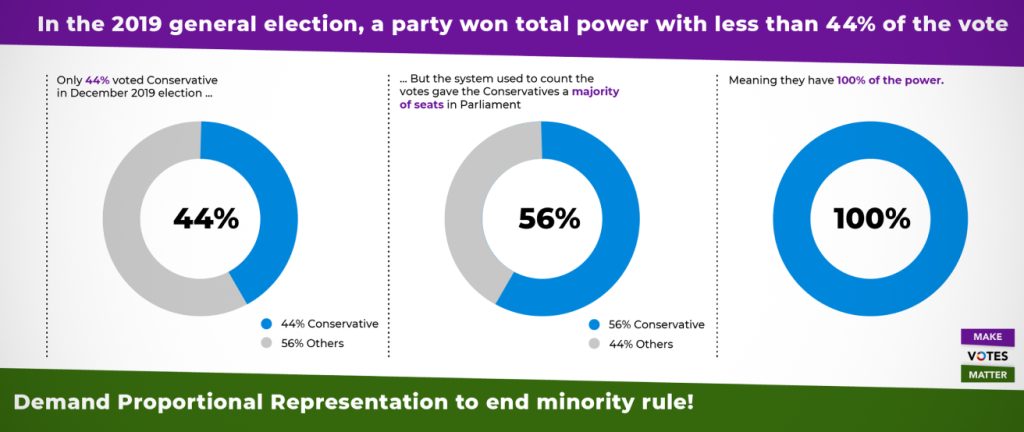
In 2024, nearly 80 per cent of voters in this constituency backed parties broadly on the left. Yet a right-wing challenger is competitive. That is not because most voters have changed their minds. It is because First Past the Post punishes fragmentation and rewards consolidation. Parties do not need majority support to win – they just need their opponents divided. Sometimes this benefits the right, other times the left. Either way, most voters are left without the representation they wanted.
Under these rules, negative campaigning is rational. Bar charts (sometimes questionable ones) matter far more than manifestos, with campaign leaflets focusing on viability rather than long-term vision. The goal becomes squeezing rivals, not expanding debate, and tactical voting replaces political choice.
This is not a failure of voters. It is a failure of the system.
When millions of people feel compelled to vote defensively rather than affirmatively, democracy thins out. Elections become strategic exercises rather than genuine contests of ideas. Voters are boxed in, told to hold their nose and pick the least bad option.
Gorton and Denton is not an anomaly. As British politics becomes increasingly plural, First Past the Post is struggling to cope. It was designed for a two-party era, and we very clearly are no longer living in one.
Proportional Representation would not eliminate disagreement or competition. But it would remove the spoiler dynamic. Parties would need to win support, not just divide opponents. Voters could back what they believe in without fear of wasting their vote. Campaigns could focus on policy rather than strategic brinkmanship.
We do not yet know the result of this by-election, but what we know for sure is that the campaign itself has exposed the limits of our current system. We have no time to waste: unless we change it now, at the next general election most seats could look like this. Thousands of wasted votes. Most voters unsatisfied with the outcome. Thousands knowing they couldn’t even vote according to their beliefs in the first place. Toxic campaigns, arbitrary results, anger and disillusionment.
We know there’s a better way of doing democracy. Let’s demand Proportional Representation before it’s too late.