
By Emma Harrison, CEO of Make Votes Matter.
For months there have been rumours about the return to Westminster of Andy Burnham. Talk of which seats might become vacant, who could be persuaded to stand down for the self-styled King of the North. Makerfield would be a tough seat for him to win, but right now it’s the only vacant one in play.
Tied to the resignation of Wes Streeting, a Labour leadership battle appears to be on the cards whether anyone wants one or not. The grievance culture, and frankly the psychodrama, currently playing out in the Labour Party is a reminder that First Past the Post no longer delivers the stability its defenders promise.
That argument has always been a little shaky. We’re constantly told FPTP gives us “strong and stable government”, yet in the last decade we’ve had coalition horse-trading, revolving-door prime ministers, parties tearing themselves apart in public, and millions of voters backing parties that end up massively underrepresented in Parliament.
This might sound like a partisan post, it isn’t. There’s a reason we at Make Votes Matter HQ are listening carefully. The two names most frequently mentioned as potential successors have both, at various points, flirted with electoral reform.
Andy Burnham has been the clearer advocate. In 2022 he said: “I think we need proportional representation now.” At the Labour for a New Democracy rally in 2025 he supported the need for a National Commission on Electoral Reform. Hard to get more direct than that.
Wes Streeting’s position is more nuanced. He hasn’t made the same full-throated case, but he has repeatedly been linked to pro-electoral reform sentiment inside Labour. The New Statesman recently noted that Streeting had “at some point voiced support for electoral reform” and placed him among Labour figures who have been in the pro-PR camp at various stages of their careers.
That doesn’t mean PR is imminent but it does mean the conversation isn’t going away. And it’s not just politicians. Will Self made an impassioned case for PR on Sunday with Laura Kuenssberg, arguing that Britain’s political system increasingly looks incapable of representing the electorate it serves.
Stephanie Flanders raised the issue on BBC Any Questions, pointing to the growing mismatch between how people vote and the governments they get.
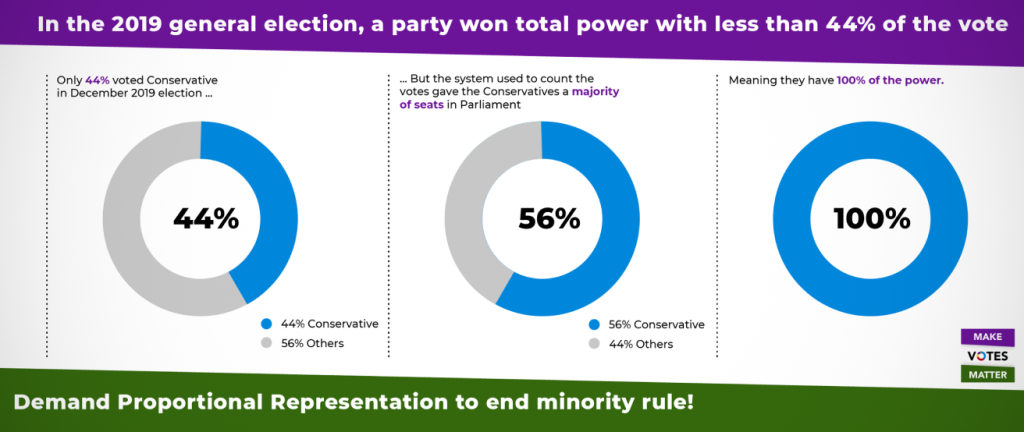
And that’s the bigger story here. PR keeps returning to the political agenda because the problems it’s trying to solve keep returning too. Under First Past the Post, parties can win huge majorities on a minority of the vote. Leadership contests can become national crises. Entire regions can be politically written off. Voters are told to vote tactically rather than honestly.
Then Westminster acts surprised when people become frustrated with politics.
This isn’t about who wins the next Labour leadership contest, if there even is one. It’s about recognising that electoral reform remains firmly on the agenda because the current system keeps making the case for change all by itself.