In today’s world, the term “nepo babies” has taken on a life of its own, sparking debates about privilege, access, and the role of family connections in shaping careers. Thus far, one group which wields considerable power has avoided this interest in ‘nepo babies’: hereditary peers. But that is about to change as a law to reform the House of Lords is being introduced by the Labour government. The Bill will remove the remaining 92 hereditary peers, whose presence in the Lords Labour has described as “outdated and indefensible”.
Defenders of hereditary peers say these individuals are far from ‘products of their lineage’ rather they bring unique value from a lifetime of service and knowledge. They argue that our nation is built on tradition and delight in the fact that some families can trace their lineage back 1000 years. Further, supporters argue that hereditary peers provide a necessary counterbalance to a patronage-based system and have deep-rooted knowledge and a sense of responsibility toward their fields.
But as our society – and democracy – has evolved, the role of hereditary peers has become increasingly contentious. For MVM, the debate surrounding their role highlights the need for more fundamental reform of the way our Parliament is composed. Removing hereditary peers is driven by a recognition of the need to improve representation, equality, and modern governance in our politics. So, what can we learn from Lords reform and how could it apply to changes to the Commons?
Strengthening democratic legitimacy
Hereditary peers represent a small, privileged segment of society that does not reflect the UK’s diverse population. In a democratic system, representation should be inclusive and reflective of the experiences and needs of all citizens, so reforming the House of Lords to eliminate hereditary peers is a small step toward creating a more representative Parliament. But minor reform to the upper chamber won’t be nearly enough to restore public faith in politics. The National Centre for Social Research found that 79% of people think the system of governing Britain could be improved ‘quite a lot’ or ‘a great deal’. In the same survey, they found that 45% of people say they ‘almost never’ trust governments of any party to place the needs of the nation above the interests of their own political party.
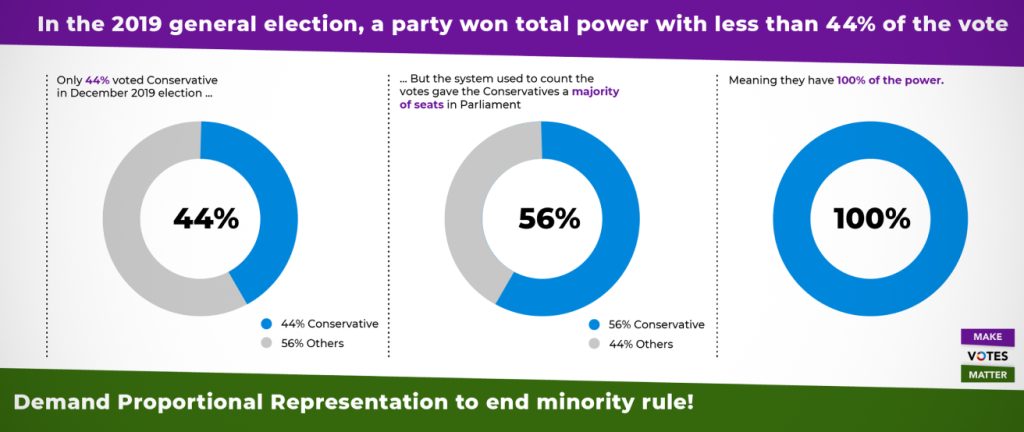
Scrapping hereditary peers comes from a recognition that representation matters in politics. Our archaic and dysfunctional political system needs reform on multiple levels. But fundamentally strengthening democratic legitimacy requires addressing the democratic deficit where it is most keenly felt, in the Commons. Crucially, it’s not the change that the public really wants to see, and that is a new voting system. When polled in July 2024, YouGov found that 54% of people backed moving from First Past the Post to Proportional Representation.
Campaigning for change
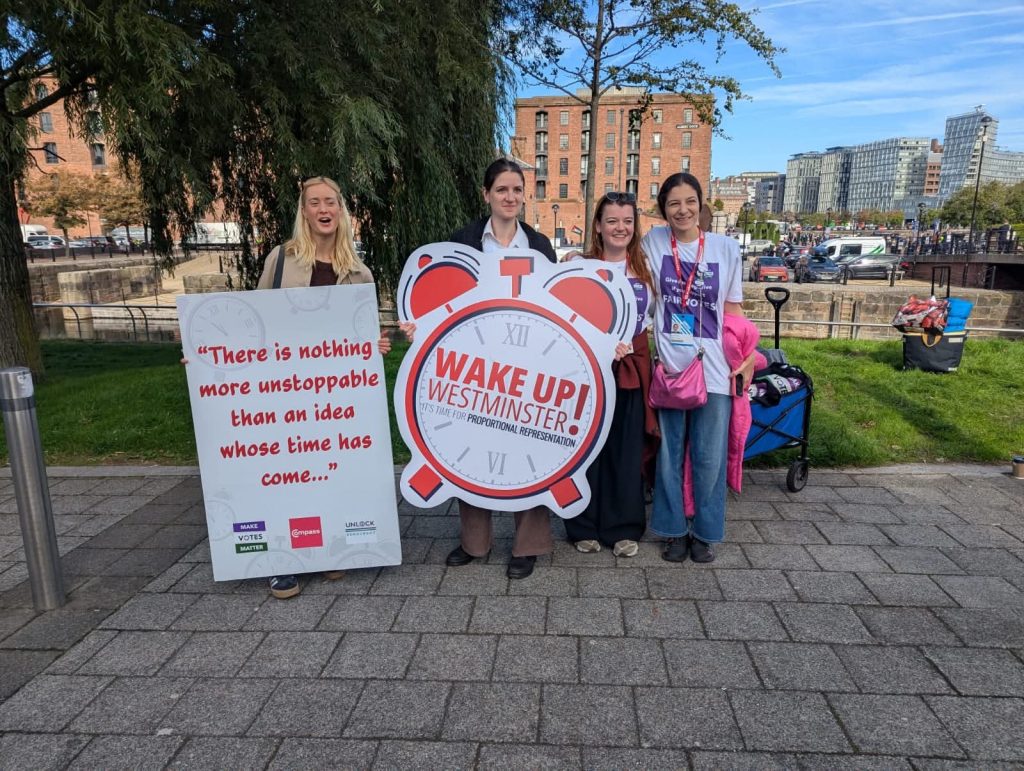
Every day we hear from people crying out for a fairer system, one where every vote counts. People are demanding a system that ensures that the number of seats a party receives in the Commons reflects its share of the overall vote, allowing for a more accurate representation of their views. They are fed up with wasted votes. They are worried about disillusionment with politics and what that means for our country’s future. We don’t just hear this through polls and the many subscribers to our mailing list, we are lucky to have local groups who tell us how fed up people are with First Past the Post. These super campaigners work tirelessly for Proportional Representation, they talk at events, host coffee mornings and run street stalls and lobby their local MPs and candidates.
It’s not just the public who want reform. Politicians have been calling for it. Andy Burnham, the Greater Manchester Mayor, believes the whole system needs rewiring. During the Labour for a New Democracy fringe he called for a commission on the whole voting system – something we are backing. Ellie Chowns MP for North Herefordshire has been banging the drum for Proportional Representation and is co-chair of the APPG for Fair Elections – an initiative we’re supporting.
Calling time on hereditary peers is one thing, but we are calling on the government to go further and reimagine governance for a modern, dynamic society. We want Labour to press forward with broader reforms to reflect the values of inclusivity, accountability, and representation that are essential for building a political system that genuinely serves the public. Lords reform must be a stepping stone to reforming the House of Commons.