“Nobody dominates British politics anymore.”
So says Professor Sir John Curtice, the UK’s leading elections expert, in his analysis of this year’s local election results. And he’s right.
For decades, British politics was shaped by a tug-of-war between Labour and the Conservatives. But those days are over. The 2025 local elections have confirmed that we are now living in a genuinely multi-party democracy—just one still shackled by a voting system built for another era.
A political landscape in flux
Reform UK made major inroads this year, scoring its first parliamentary by-election victory and securing control of Greater Lincolnshire with a 44,000-vote mayoral win. The Greens continued their slow but steady climb, and the Liberal Democrats are securing more and more seats. Meanwhile, Labour and the Conservatives both suffered blows, especially in localities where voters are disillusioned with the status quo.
Across the board, the message was clear: no single party commands the electorate. Polling has shown for months that three parties consistently draw more than 20% of voter intention. Fragmentation is the new normal.
A system stuck in the past
And yet, First Past the Post (FPTP) continues to dominate—distorting results and misrepresenting public will.
In several council contests, parties claimed control with well under 40% of the vote. In some cases, the winning share dipped much lower. These aren’t landslides; they’re statistical illusions. In the West of England mayoralty, turnout was less than 10% of the electorate. The winning candidate received just 25% of that, yet now controls a combined budget of over £200 million.
This is not democracy functioning well—it’s democracy in crisis.
Fragmentation without representation
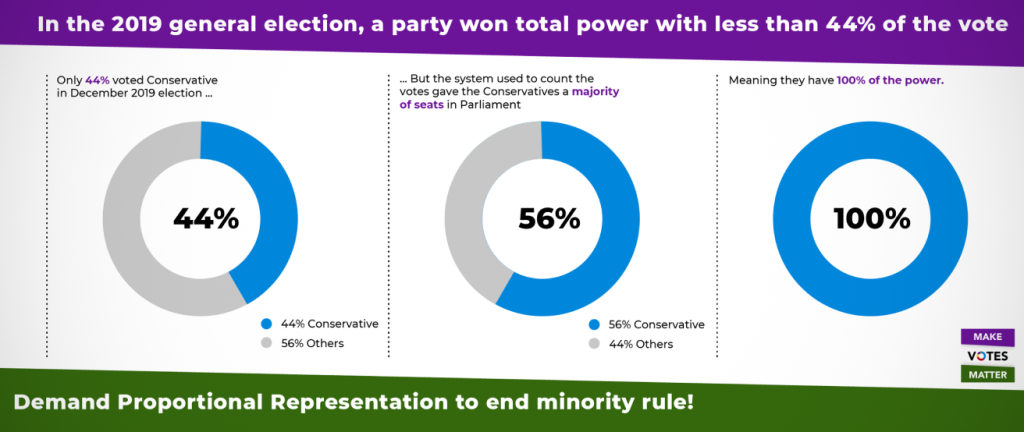
The success of Reform UK—whatever your view of its platform—shows that voters are searching for alternatives. But under FPTP, those alternatives are routinely punished. A party can garner hundreds of thousands of votes and still fail to win meaningful representation, while another can govern with a minority of public support.
As Curtice says, no one dominates anymore. But the voting system still acts like one party should. It’s an outdated model that no longer serves the electorate—and voters know it.
This is a turning point
These elections should serve as a wake-up call. Voters are rejecting binary choices. They’re demanding a system that reflects the real diversity of views across the country.
That system is Proportional Representation (PR)—where every vote counts, power is shared, and policies are shaped by cooperation, not confrontation. It’s fairer, more stable, more inclusive, and fundamentally more democratic.
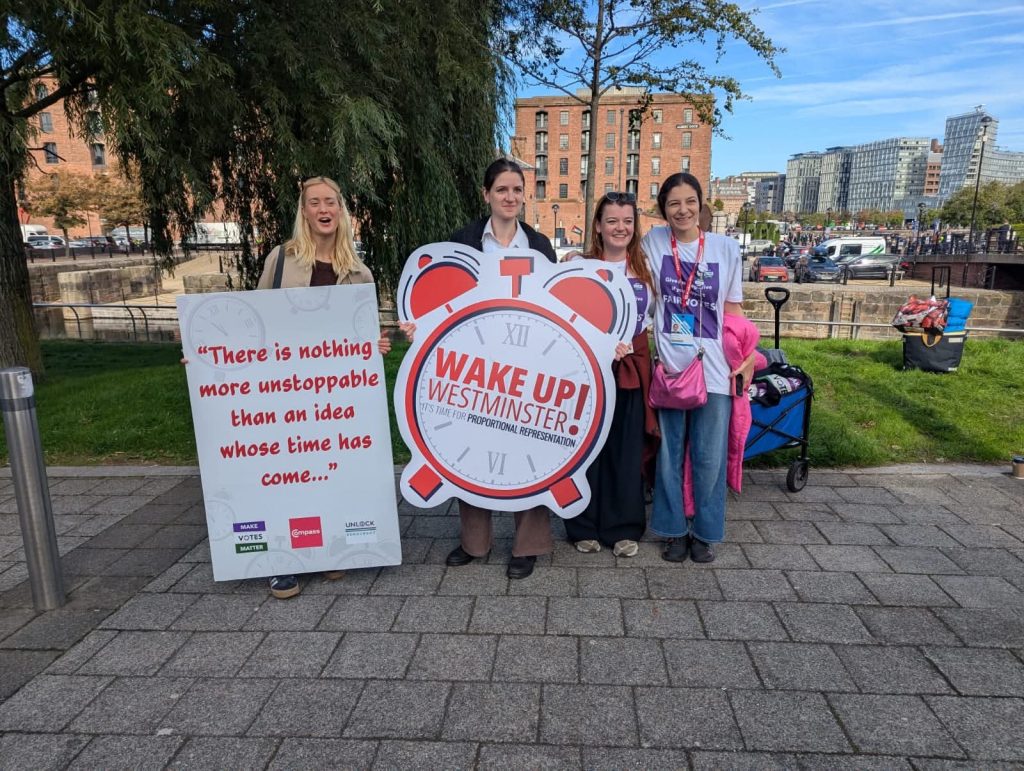
That’s why Make Votes Matter has joined forces with Compass, Open Britain, and Unlock Democracy to say loud and clear:
No more distortions. No more fake majorities. No more First Past the Post.
By Emma Harrison, Make Votes Matter CEO